The hidden wealth of wet meadows: restoring habitats to conserve rare plant species
Wetlands are among the most valuable, but also the most endangered, ecosystems in Europe. Although they often occupy small areas, they play an extremely important role in preserving biodiversity, regulating water, mitigating the effects of climate change and maintaining traditional landscapes.
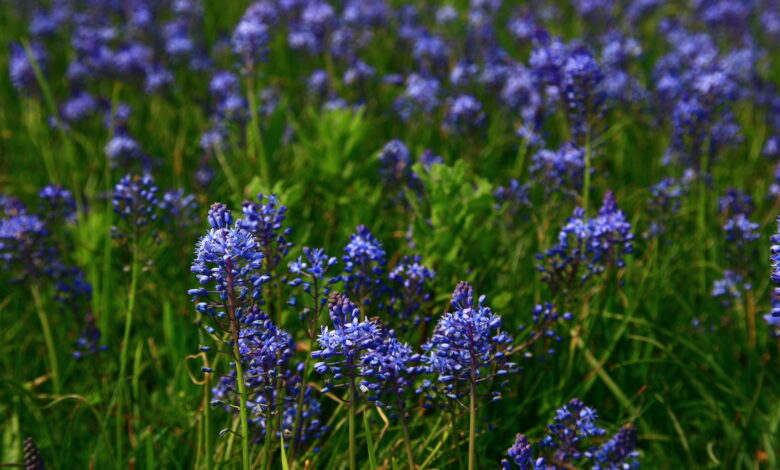
Wet meadows, marshes and occasionally flooded areas are home to numerous plant and animal species that have adapted to these specific conditions. In the karst area of Croatia, such habitats are particularly valuable because they represent water sources in the predominantly dry Mediterranean and sub-Mediterranean landscape. However, in recent decades, many of them have disappeared due to changes in land use, changes in the water regime, the abandonment of traditional mowing and grazing, and the spread of shrub and woody vegetation. With the loss of these habitats, not only the landscapes we know disappear, but also the numerous rare and endemic species that depend on them.
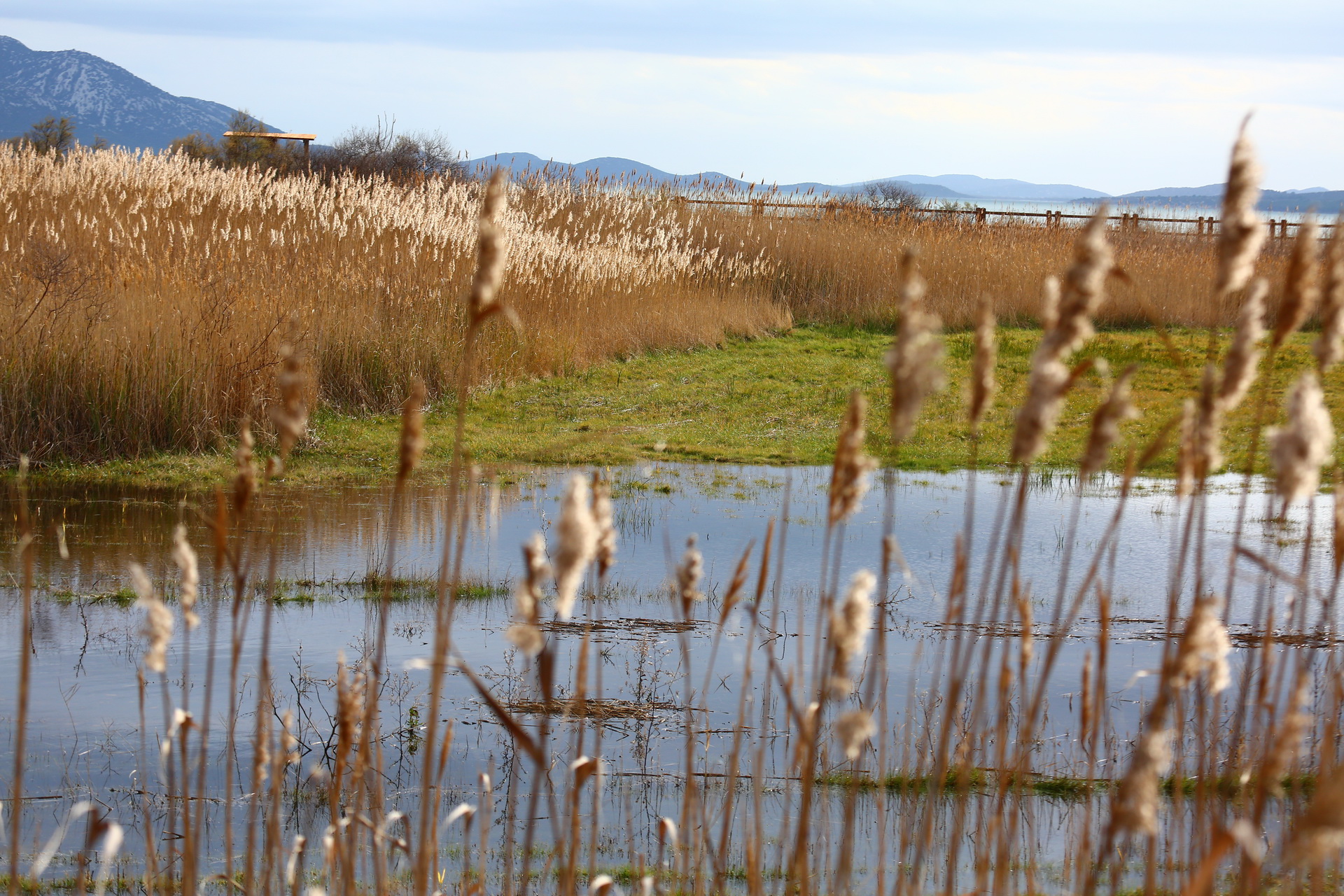
Among such species, the Amethyst Meadow Squill, also known as Dalmatian Scilla, (Chouardia litardierei) and the marsh onion (Allium telmatum) stand out, plants that are closely related to the humid habitats of the Dinaric karst and the Mediterranean region of Croatia.
The Dalmatian Scilla (Chouardia litardierei) is an endemic species of humid meadows of karst fields. It is a typical geophyte, which means that it has an underground stem or bulb. The plant is 20 to 30 cm tall, and at the top it develops a dense pyramidal inflorescence consisting of 15 to 35 flowers.
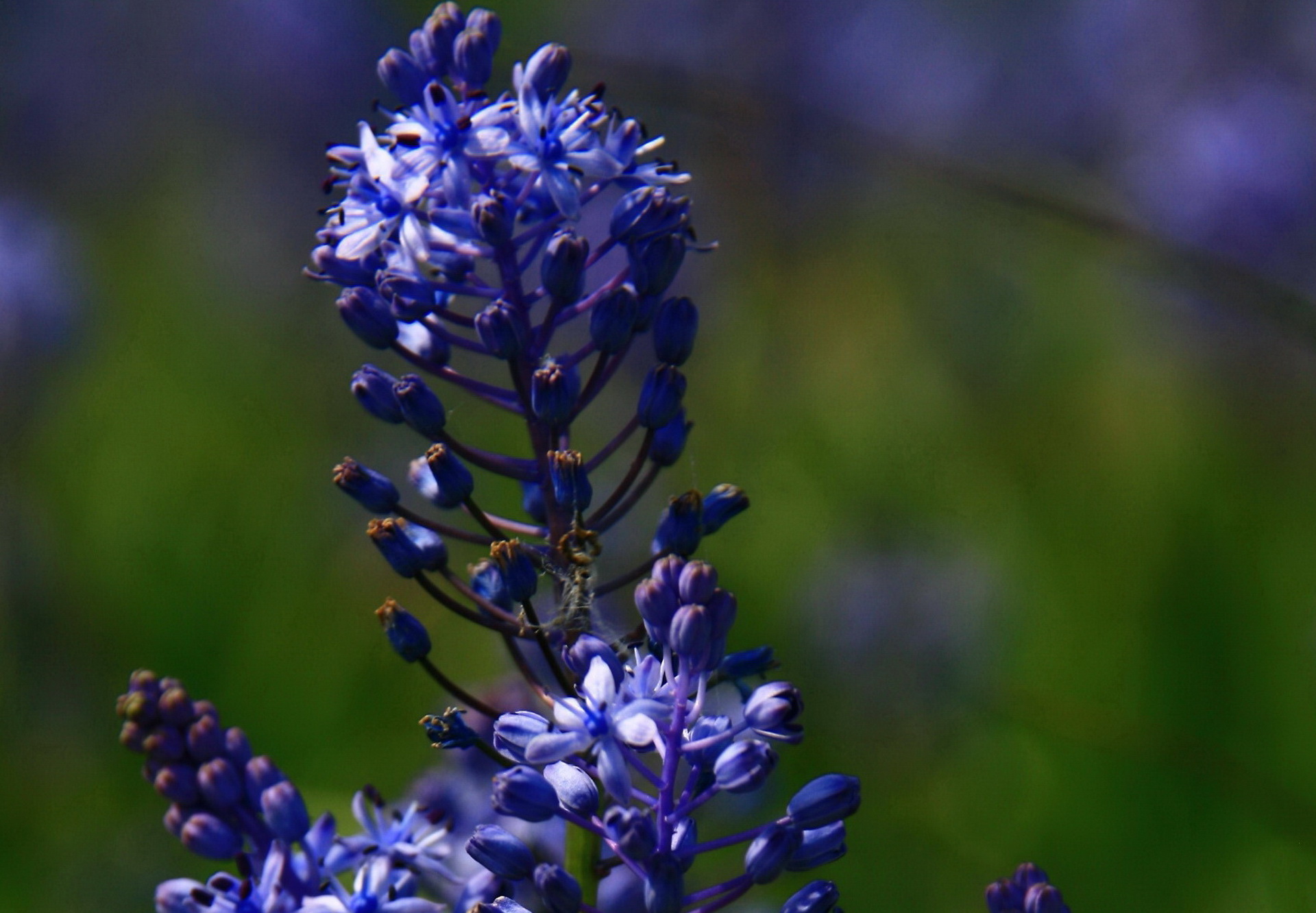
Its blue bloom appears in May and June, after which it develops fruits and, depending on the temperature and groundwater level, disappears by mid-July or August. In Croatia, it is present on the Dinaric karst, from Senj and Pag to Dubrovnik, with the upper limit being Karlovac. It is most widespread in Lika and Dalmatian Zagora, while on the coast it can be seen in the vicinity of Šibenik, Split, Trogir and Rijeka dubrovačka. It grows in occasionally flooded or wet and open habitats, and has also been found on saline soils and wet nitrophilous pastures and at altitudes of 0 to 1500 meters above sea level.
In Croatia, it has the status of a strictly protected species and is listed as near threatened (NT) due to habitat loss. The biggest problem is the abandonment of areas that were used as pastures or hay meadows, which leads to the succession and overgrowth of such grasslands. Furthermore, its habitats are also being lost due to changes in the water regime, land reclamation or construction.
The Dalmatian Scilla has been grown in gardens since 1827 and can withstand temperatures down to -15°C. It is also interesting that the bulbs of some species of squills can be used to extract ingredients used in traditional medicine as a cough medicine.
Another valuable species of wetlands is the marsh onion (Allium telmatum Bogdanović, Brullo, Giusso & Salmeri). This species has a white-pink inflorescence with purple details, composed of 10 to 28 flowers. It develops an ovoid bulb, and the plant is usually between 30 and 40 cm tall.
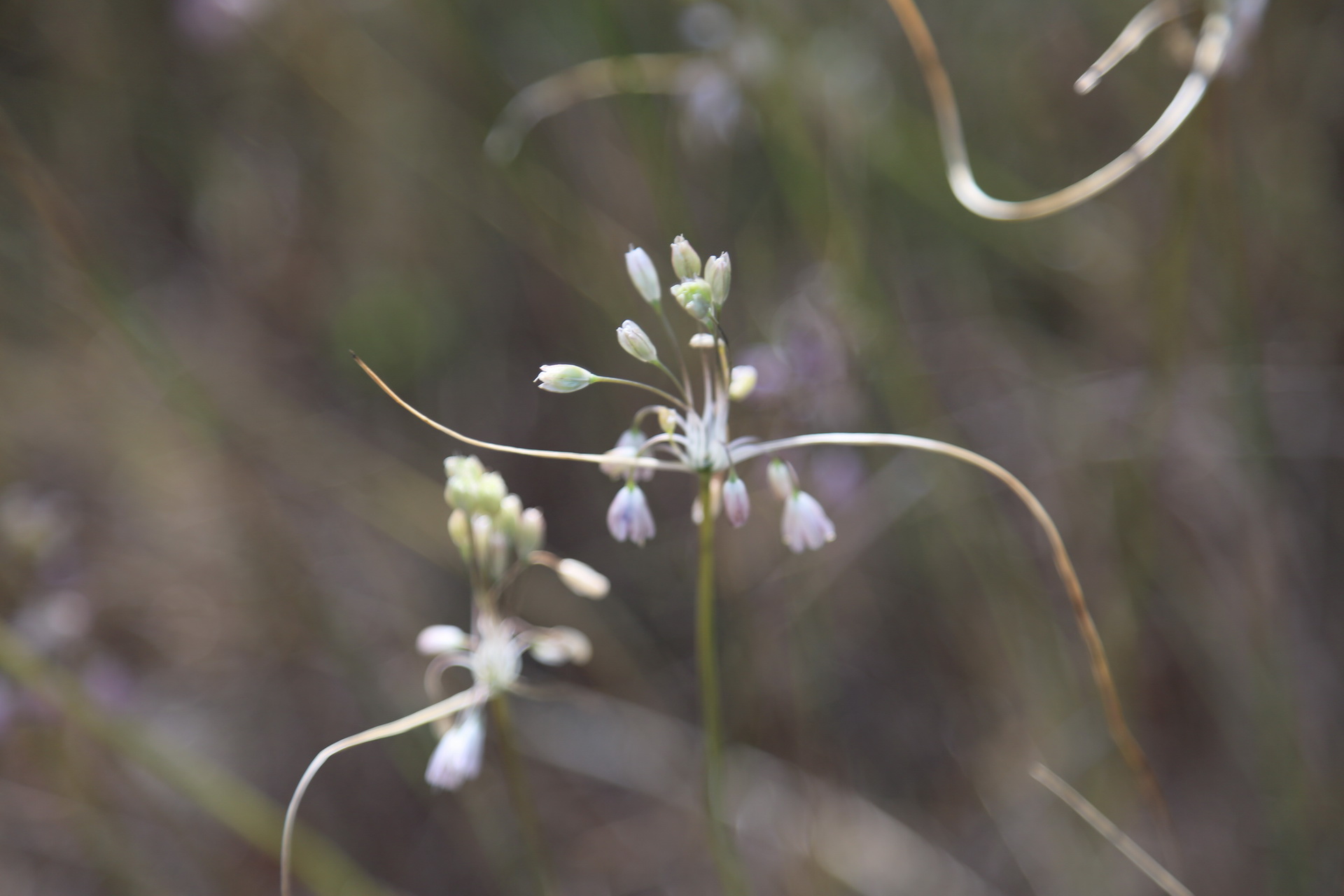
The marsh onion blooms in the autumn period, from September to November, which distinguishes it from most species of the onion genus that bloom during spring and summer. It tolerates summer droughts well, but at the same time is strictly tied to very specific habitats. It is a stenoendemic species of coastal salt marshes and occasionally submerged Mediterranean shrubby salt marshes – rare and endangered habitats.
In Croatia, it grows in northern and central Dalmatia, on the island of Vir and Cape Stinica, while in 2010 it was also recorded in the Vransko jezero area. Since 2009, the marsh onion has had the status of a strictly protected species, and the main threats to its survival include overgrowing of habitats and conversion of natural areas into agricultural land.
In order to preserve these and other rare species, as part of the “Restoring Wetlands” project, together with partners from the Association Biom, we plan to collect seeds of the above species and spread them to new suitable habitats. These activities, together with the restoration of wetlands, will contribute to reducing their threat and the long-term preservation of populations. The project has already mapped all suitable habitats of these species in the Ravni Kotari and Vransko jezero areas, which has provided a better insight into their actual distribution and enabled the selection of the most suitable locations for habitat restoration. Planned restoration activities include mowing, removal of invasive alien species, planting green barriers along roads, and targeted grazing.
Maintaining wetlands through traditional management methods, such as mowing and grazing, is crucial for their survival. When such habitats are abandoned, the natural process of succession leads to changes in plant cover, overgrowth, and the disappearance of species adapted to open meadow and wetland conditions. Restoring wetlands means preserving entire ecosystems, landscapes, and natural processes that have shaped the space for centuries. Through projects such as “Restoring Wetlands”, the foundations are being created for the survival of species that are part of Croatia’s natural heritage.