On Tuesday, November 4, 2026, the “Solidarity for Natural Heritage” volunteering program—part of the European Solidarity Corps—began at Nature Park Vransko jezero, marking its fifth consecutive year.
This year’s volunteer team consists of six individuals from Finland, France, Ireland, Portugal, and Austria. Over the course of the 29-day project, the team will work on restoring dry-stone walls, restoring a floodplain meadow, and maintaining visitor infrastructure within the Nature Park.
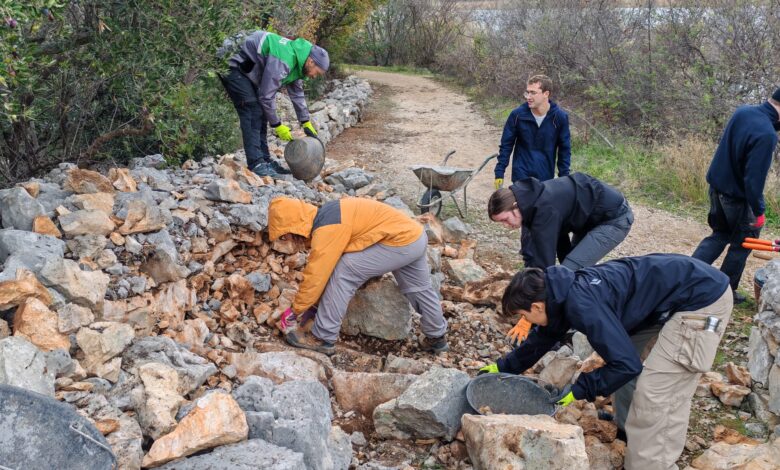
By restoring dry-stone walls along access paths in the Modrave area, the volunteers will learn and practice traditional dry-stone construction techniques—a craft recognized on the UNESCO Representative List of the Intangible Cultural Heritage. Their efforts will also help improve the paths used by local olive grove owners, visitors to the Nature Park, and staff from the Public Institution during their regular site surveys and field research.
The traditional knowledge of dry-stone walling will be passed on to the volunteers by their supervisor, Miran Križanić, from the association “4 Grada Dragodid.” During the first week of the volunteer program, the volunteers met with coordinators from the Public Institution, as well as with one another. They then began their journey into the world of dry-stone walls and dry-stone construction, alongside the restoration of habitats in the area of Vransko jezero.
The volunteers will work 6 hours a day, five days a week, and will spend their free time exploring the beauty of the lake and its surroundings. Accommodation is provided at the BioSfera center, where the volunteers have access to a comfortable and secure shared space for sleeping and preparing meals.
A brief overview of the past volunteer week:
- The first day featured interactive games designed to help the volunteers get to know one another better, with a focus on communication and intercultural learning. The day also included a tour of the BioSfera building and a walk around Biograd na Moru, the town where the volunteers will spend nearly a month.
- The second day was spent at the Prosika harbor, joined by staff from the Argonauta Association (based on the island of Murter). Near the Prosika info center, the group engaged in team-building activities and explored topics such as learning techniques and mental health. They also received information about the “Youthpass”—a certificate issued upon completion of the volunteer program, in which volunteers will document all the skills they have acquired.
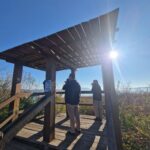
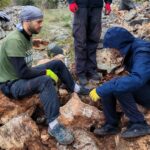
- On the third day, our volunteers walked along the western side of the lake, visiting a wooden educational trail within the ornithological reserve. Under expert guidance, they learned about bird fauna, migration patterns, general biodiversity, and the ecological significance of this wetland area. They also visited a bird-ringing station to observe the ringing process firsthand and learn why this activity is crucial for understanding species biology and identifying areas vital for their conservation and survival. Afterward, the volunteers participated in an introductory workshop on dry-stone wall restoration.
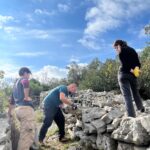
- The fourth day continued with further training on dry-stone wall restoration, during which the volunteers had the chance to practice this traditional skill on a collapsed section of a dry-stone wall within the Park. Despite the beginner’s challenges, they very quickly mastered the skill of stacking and fixing smaller and larger stones, without the use of binding material.
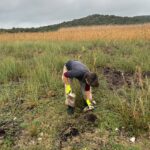
- On the fifth day, the volunteers, together with the secondary schools from Gračac and Biograd, removed the vegetation that had grown around the Benča puddle and thus contributed to the prevention of overgrowth, as well as the preservation of this unique habitat.
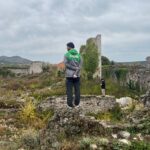
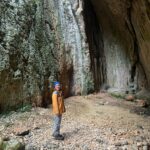
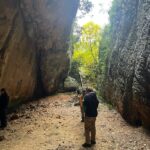
- On the sixth day, the volunteers reflected on the previous week through a group discussion and additional team-building activities, after which they visited the Pećina spring near Vrana, as well as the ruins of the Old Town of Vrana, located in the immediate vicinity of the spring.
What is the European Solidarity Corps (ESC)?
The ESC is a European Commission program that offers young people aged 18 to 30 the opportunity to contribute to society, volunteer, and work for the common good—thereby demonstrating solidarity with disadvantaged individuals—while simultaneously gaining invaluable experience and developing their skills. Volunteering projects address social needs and strengthen local communities, while also providing opportunities for non-formal and intercultural learning, as well as the development of personal and professional skills. If you are a young person seeking a volunteering experience and wanting to drive change in your community, or if you are an organization looking to engage young people in activities that foster solidarity, then the European Solidarity Corps is the right program for you!
You can read more about the program here:
https://www.europskesnagesolidarnosti.hr/hr/sadrzaj/o-programu/opce-informacije/
The program is funded by the European Union through the European Solidarity Corps program.